How to Properly Maintain your Lubrication System
Buildup… Contamination… What Happened?
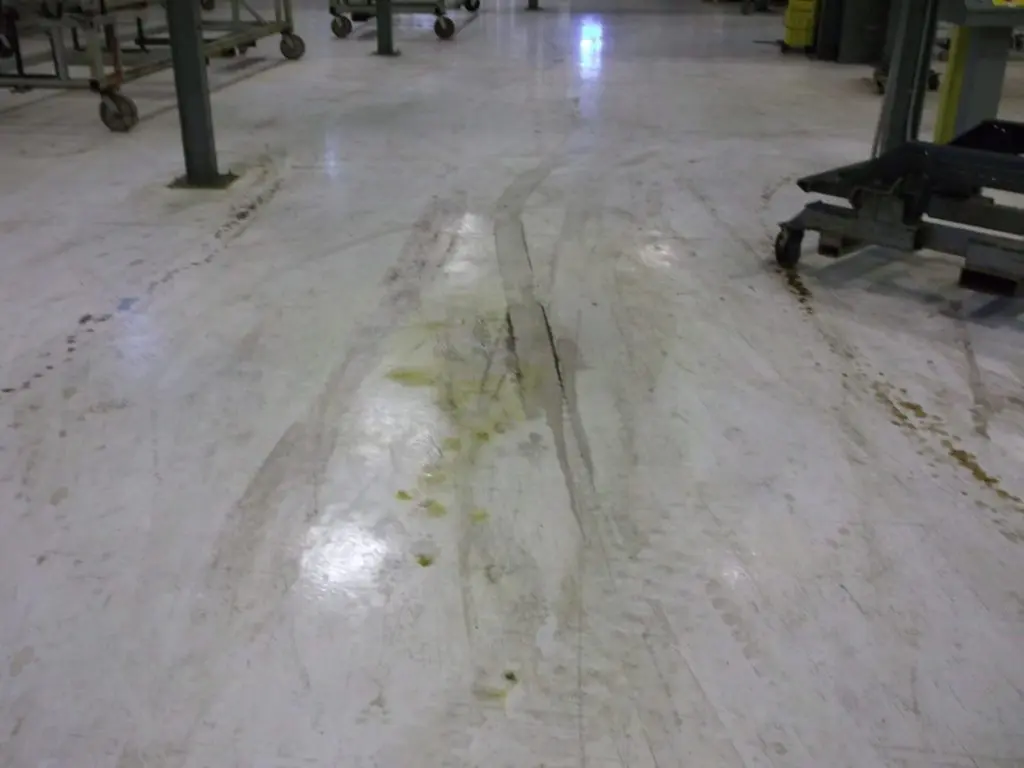
Six months after your Digilube system is installed, you may begin to notice a decline in the performance of your conveyor equipment. For example, buildup may appear on the rail, chains, and trolleys, allowing dust and dirt to collect in critical wear areas. In addition, you may start to see oil dripping onto the production floor.
So what causes this mess?
While proper lubrication is essential for extending conveyor chain life, several factors can create problems when a lubrication system is not maintained or adjusted correctly. The most common issues include over lubrication, misaligned equipment, and sensor problems.
Over lubrication is often the result of incorrect settings or miscommunication between system components. When too much lubricant is applied, excess oil accumulates on the rail and surrounding equipment, attracting dust and debris. As a result, buildup forms and overall system efficiency declines.
Misaligned Equipment
Another common issue that contributes to lubrication problems is misaligned conveyor equipment. When rails, chains, or trolleys are not properly aligned, lubricant may fail to reach the intended wear points. Instead of penetrating the bearing areas where it is needed most, lubricant can spread across unintended surfaces.
Over time, this misdirection leads to uneven lubrication, increased wear, and unnecessary buildup throughout the conveyor system. Regular inspections help identify alignment issues early before they lead to larger maintenance problems.
Sensors
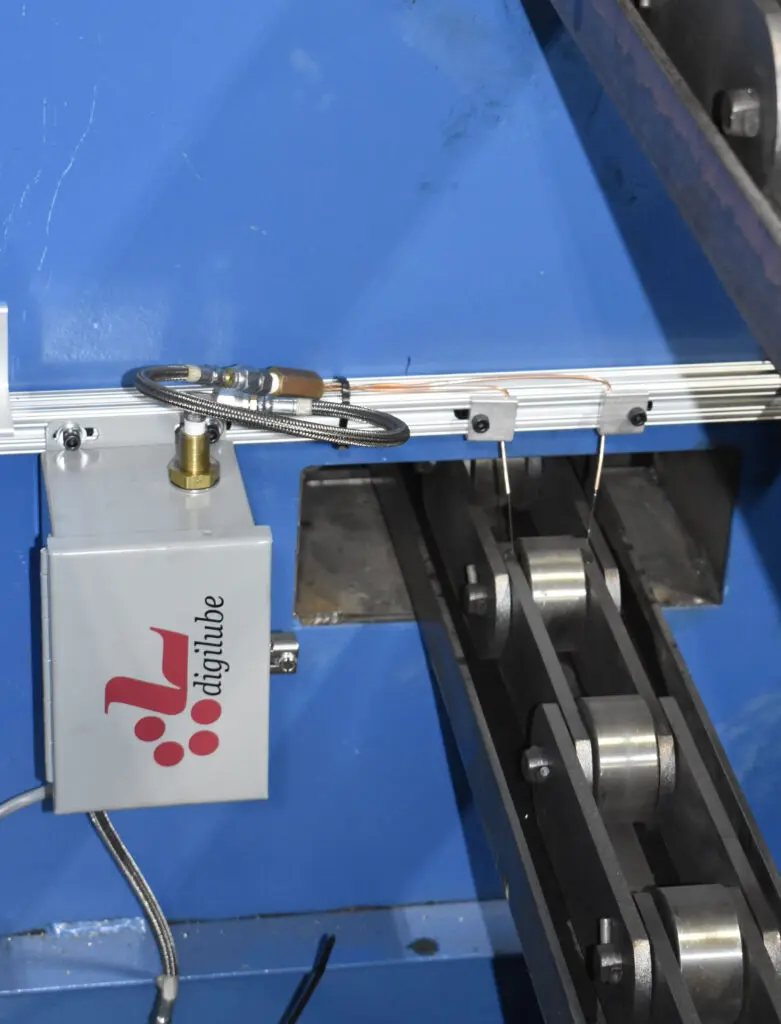
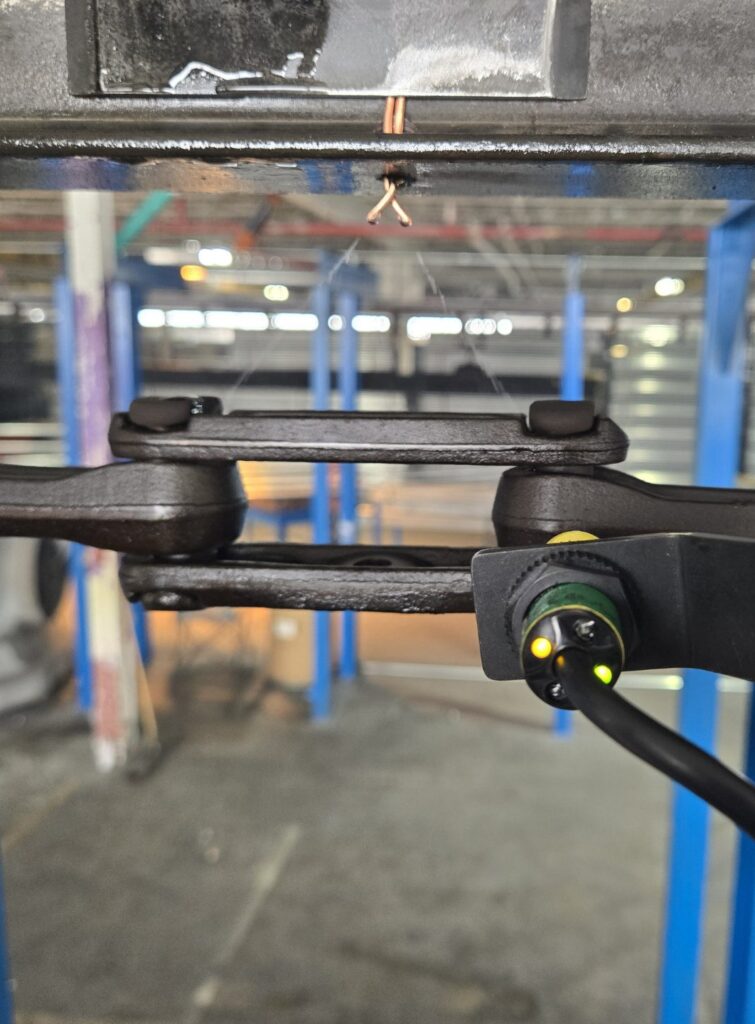
The first step in troubleshooting lubrication issues is checking the sensors to ensure they are functioning properly. Sensors play a critical role in communicating with the head controller by signaling when and how often the pins require lubrication.
If the sensors are out of adjustment or obstructed, lubricant shots may miss the pins entirely. Consequently, the lubricant can drip onto the rail or floor instead of reaching the intended lubrication points.
Because sensors control lubrication timing and accuracy, keeping them properly aligned and clean is essential for maintaining efficient system performance.
Dispensing Tubes
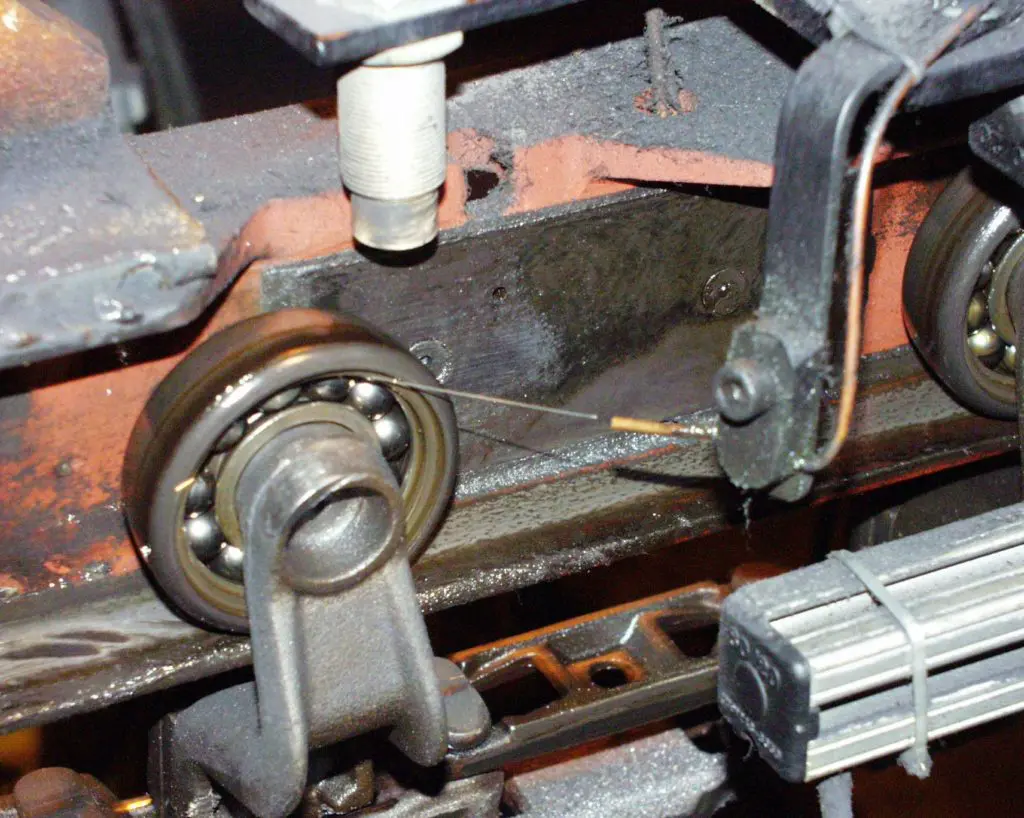
Next, inspect the dispensing tubes to ensure they are correctly positioned and calibrated. If the tubes are not pointed directly at the bearing surfaces, the lubricant may strike the outer race instead of penetrating the bearing itself.
When this occurs, lubricant drips onto the rail rather than reaching the wear area where it is needed. Over time, this excess lubricant mixes with dust and debris, which creates buildup along the rail and chain components.
In addition, constant conveyor vibrations can gradually shift dispensing tubes out of alignment. Therefore, routine inspection and adjustment are necessary to maintain accurate lubrication delivery.
Lubrication Cycle
If the sensors and dispensing tubes are functioning properly, the next step is to evaluate the lubrication cycle settings.
Take a moment to consider whether your production process has changed. For example, chains may not remain in ovens as long as before, or the load placed on the conveyor chain may have decreased. When operating conditions change, the lubrication cycle may need to be adjusted accordingly.
By modifying lubrication intervals to match production conditions, facilities can avoid over lubrication while still protecting critical chain components.
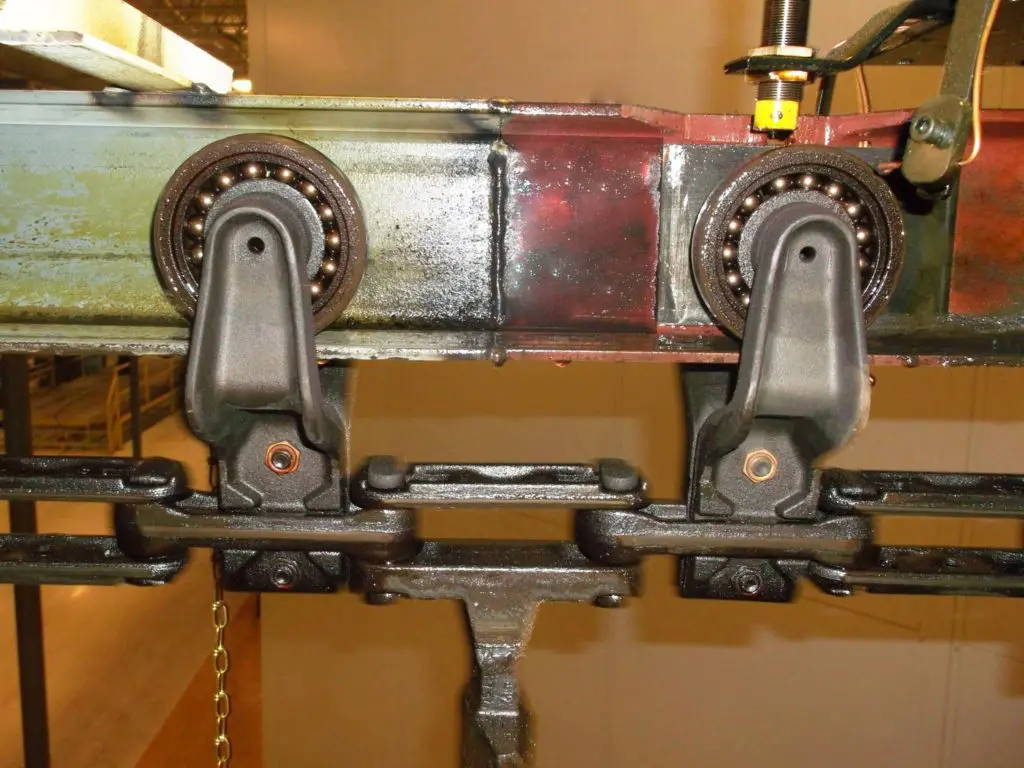
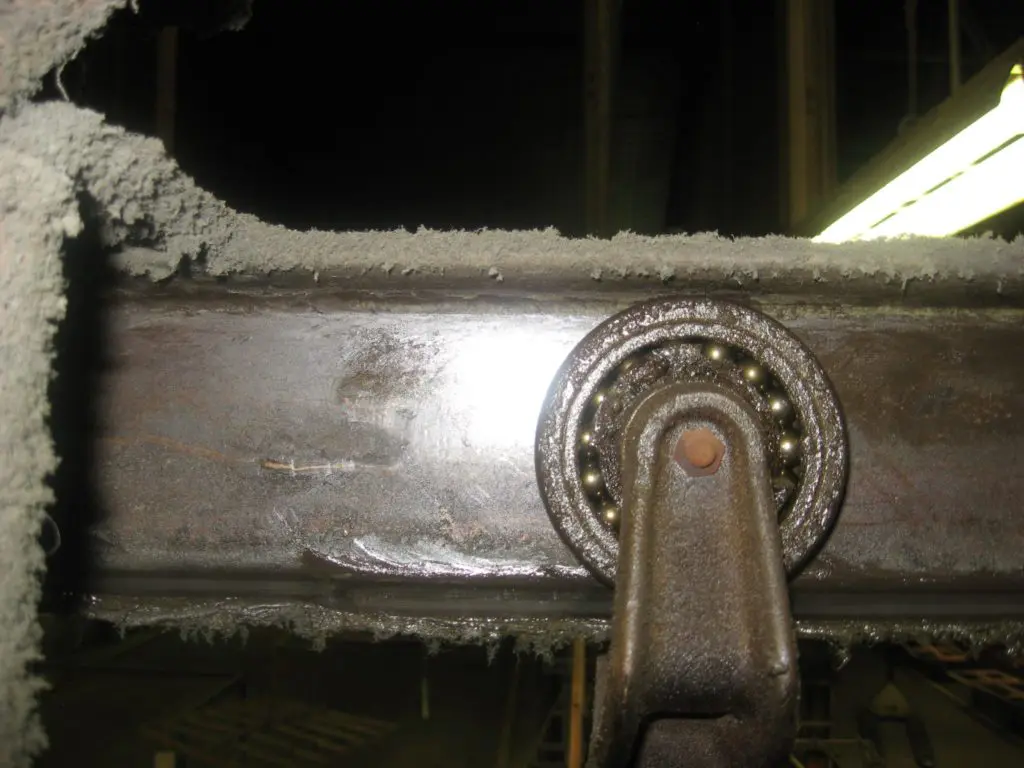
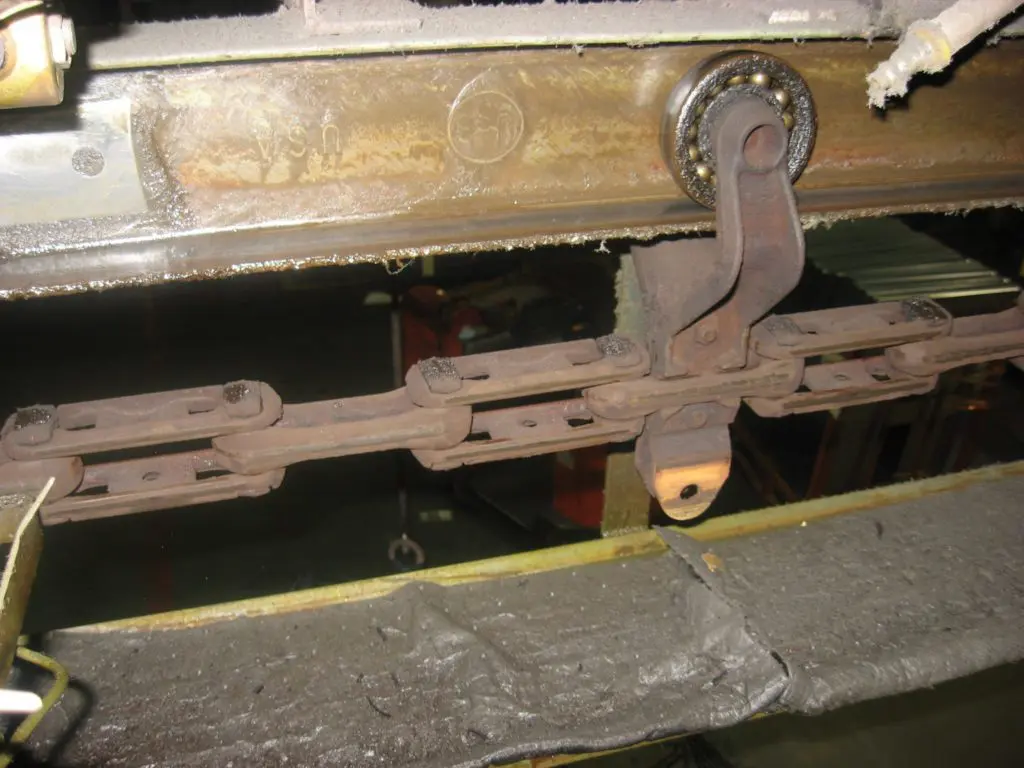
Below you can see several examples of poorly maintained rails, chains and trolleys.
Solutions
Quarterly Maintenance
Routine maintenance is one of the most effective ways to prevent lubrication issues before they affect production. At Digilube Systems, we offer service contracts upon request so customers can rely on our experienced field service technicians for regular system inspections.
During these visits, our technicians perform a thorough inspection of the conveyor chain and lubrication equipment. Their top priority is ensuring every component of the lubrication system operates at optimal performance.
Ultimately, proper maintenance extends the life of both the conveyor system and the chain itself while reducing costly downtime.
Precise Lubrication
The convenience of the DL-5003 Head Controller removes the guesswork from lubrication management. This controller ensures lubricant is delivered precisely to the critical bearing points of the conveyor chain.
During installation, maintenance managers receive training on adjusting the head controller settings to match their facility’s production schedule. As a result, the system delivers consistent lubrication while preventing excess oil buildup.
Cleaning Recommendations
Regular cleaning and inspection also play an important role in maintaining lubrication system performance. We recommend checking photo sensors and verifying the alignment of dispensing tubes at least once a month, depending on the environment within the facility.
In addition, Digilube offers several types of beam cleaners that attach directly to the trolleys. These cleaners help remove buildup from chains and rails during periods when production is down.
By keeping the wear areas free of debris, lubricant can reach the points of maximum wear more effectively. For best results, we recommend operating beam cleaners approximately every three months.